How to Extract Emails from Google Maps ?
Updated 8/24/2026
Email is the backbone of B2B outreach: the intro, the follow-up, the case study, all in one channel. So a list of local businesses with emails attached is worth real money, and Google Maps is a natural place to build one. This is why how to extract emails from Google Maps comes up so often.
One honest note first, because people get this wrong: Google Maps usually does not show business emails directly. G Maps Extractor can help find emails from publicly available business websites and online sources when available. So you can build a list with an email column, just expect gaps, not a complete set.
Can You Extract Emails from Google Maps?
Short answer: sort of, and it helps to know why before you spend time on how to extract emails from Google Maps at any real scale. A Google Maps listing reliably gives you a business name, address, phone number, website, category, rating, and hours. Email usually isn't shown on the listing itself. Most businesses put a phone number and a website on their profile and leave it there.
So where do the emails actually come from? Nearly always, it’s the business website. When you see an email in your exported Google Maps data, that address was most likely found on the company’s own site—the one linked from their Maps listing. A Google Maps email extractor visits that website and checks public-facing pages such as “Contact,” the site footer, or the about page for available email addresses. If it finds one, you’ll get that email in your file. If not, that entry stays blank.
That's the honest version. You're not pulling hidden data out of Google. You're collecting details that are already public, and filling in emails where a business has published one. Fill rates vary a lot by industry, so expect gaps.
Best Workflow: Use Online Google Maps Scraper to Build Business Lead Lists
The cleanest way to do this is the Google Maps Scraper. It's a Google Maps scraper online, so there's nothing to install and no code to write, and it builds the whole lead list in one pass.
The workflow:
- Search by keyword and location. Enter a business type like "law firm" and the city or region you sell into.
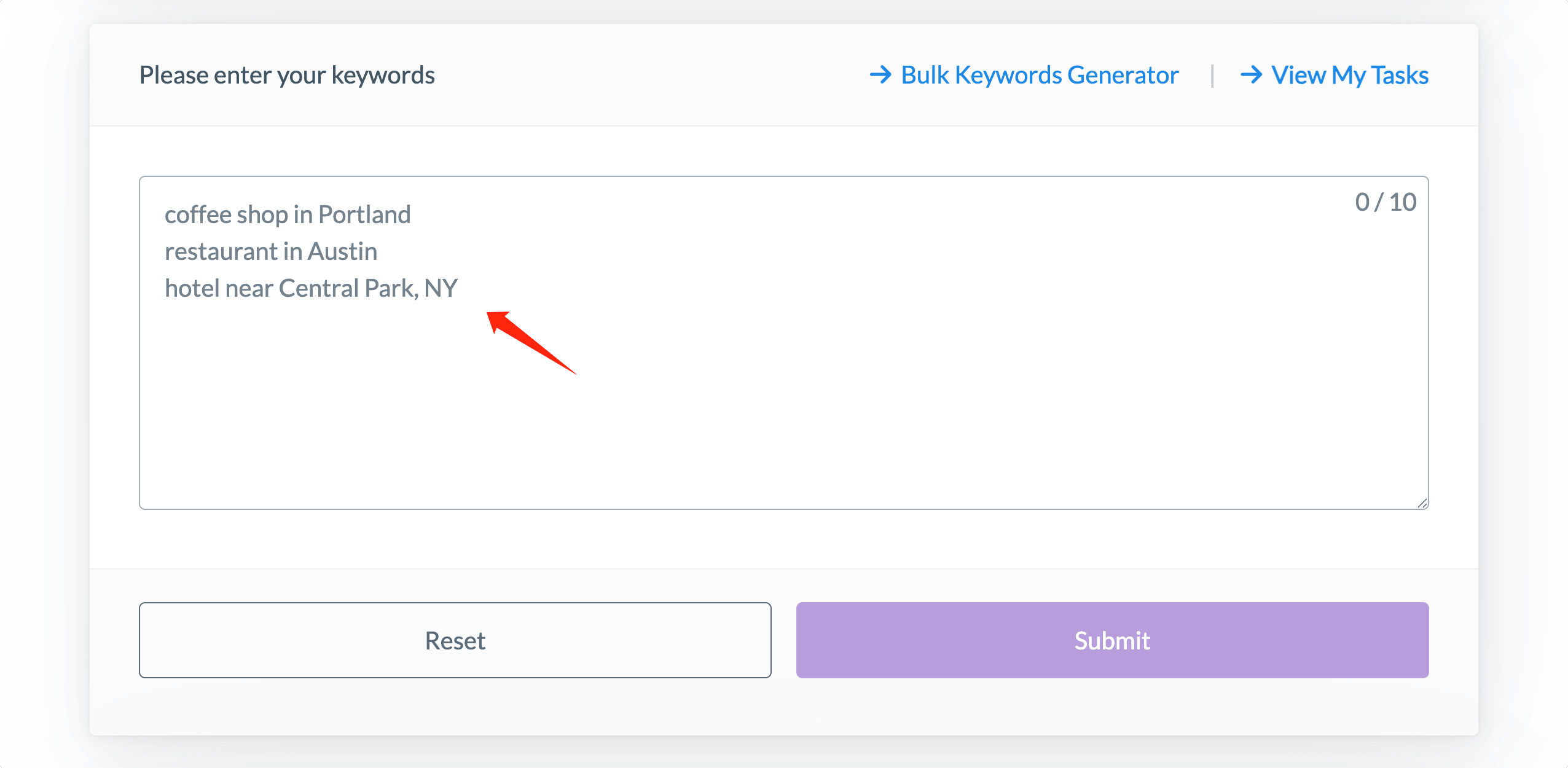
- Explore the core fields. Business name, phone, website, address, and category come back for each listing.
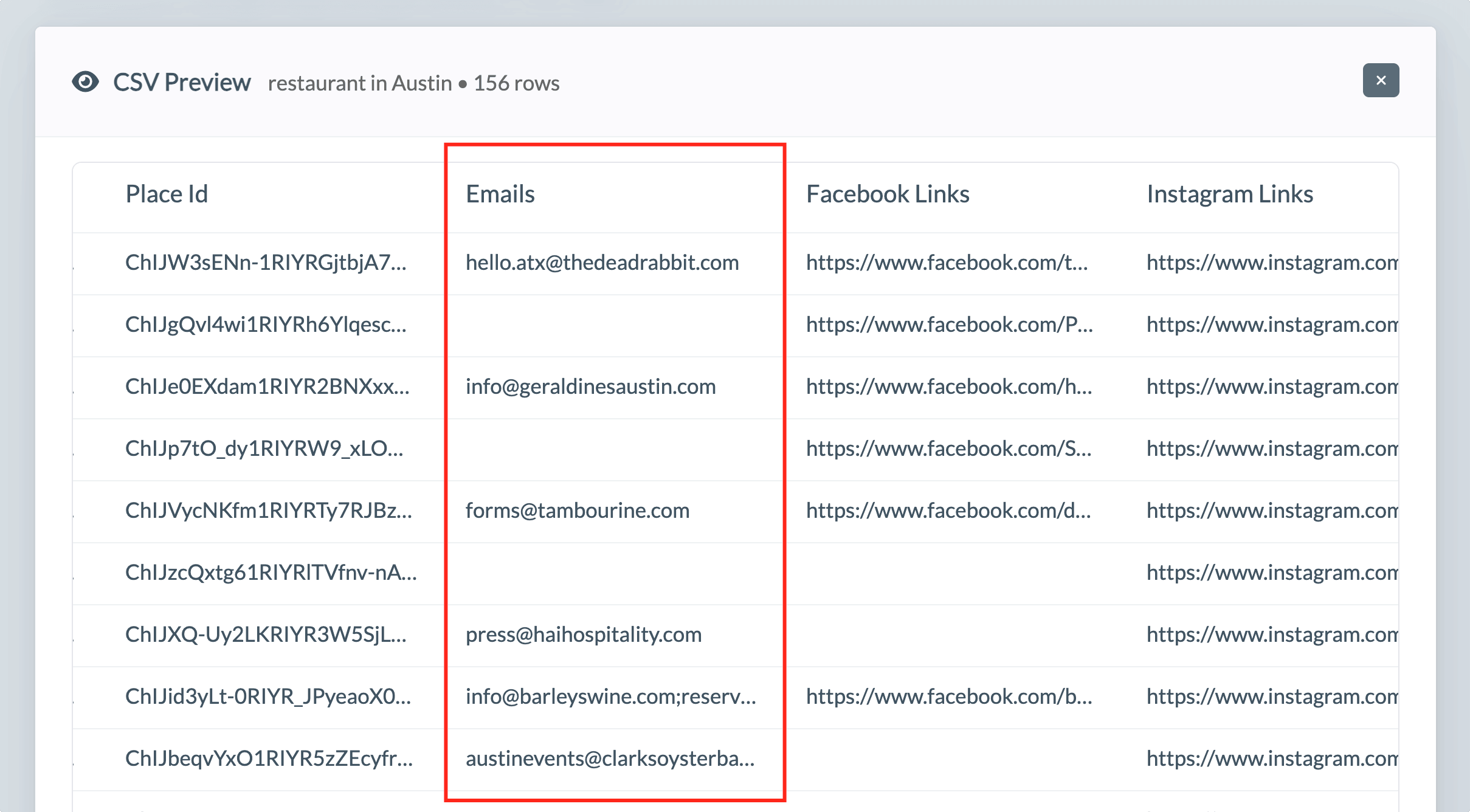
- Find emails when available. The tool checks public business websites and online sources and adds an email where one is published. Some rows will have it, some won't.
- Export to CSV. You get one clean file, gaps and all.
- Use the list for outreach or CRM. Import it, or hand it to a sales team as a working prospect list.
That's the real advantage over doing this by hand. Instead of visiting fifty websites to extract business emails one at a time, you run a single job and get a structured file, with the email column filled wherever a business made its address public. For Google Maps lead generation at scale, that's an afternoon instead of a week.
Phone numbers pair well with emails for outreach. If that's your priority, there's a companion guide on how to extract phone numbers from Google Maps.
Use API for CRM or Lead Database Automation
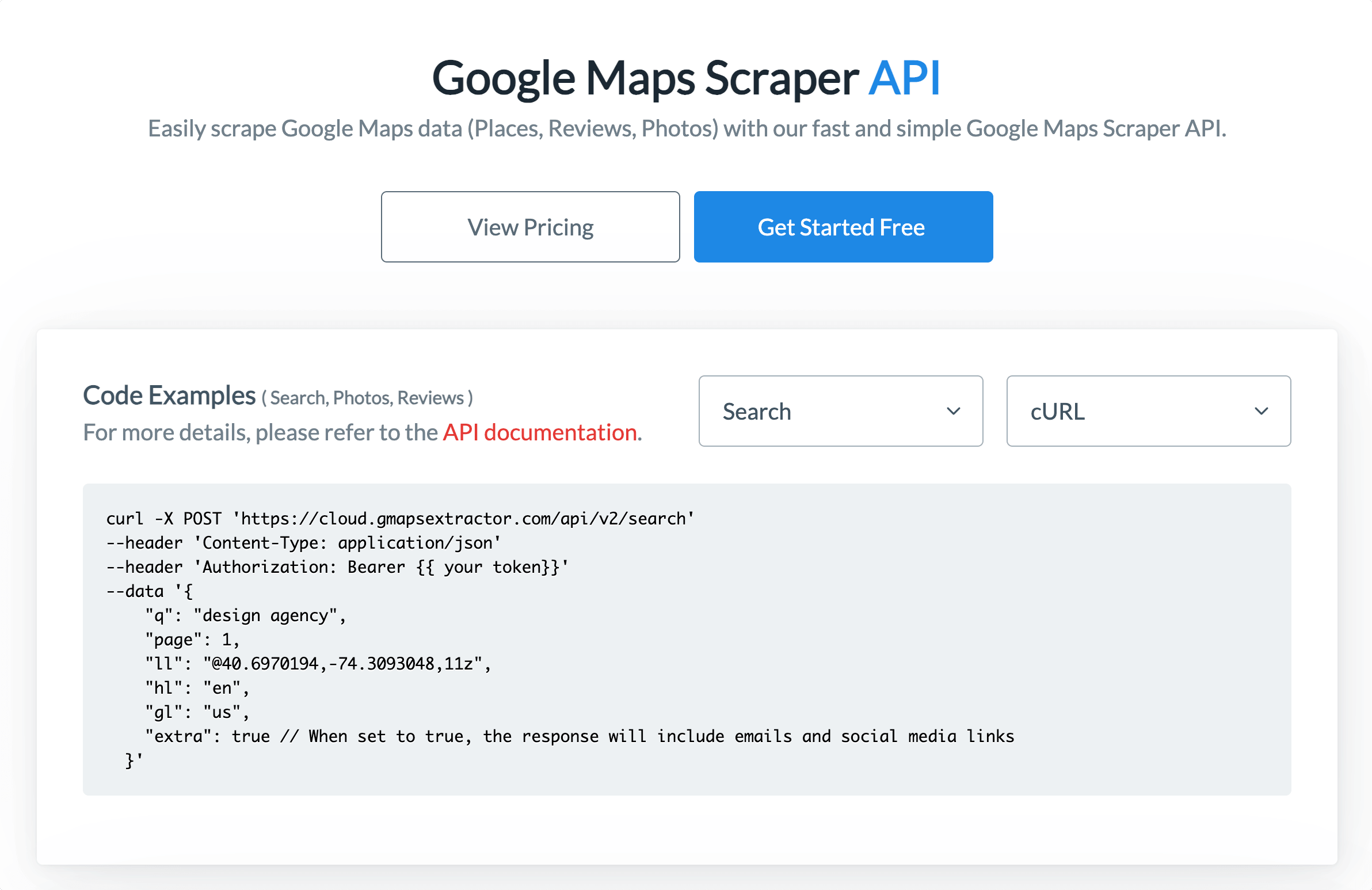
If you're feeding a system rather than a spreadsheet, the API is the automated version of how to extract emails from Google Maps at scale. Use the Google Maps Scraper API. It returns JSON, so the data lands inside your tools instead of your downloads folder. It's the right call when you need:
- CRM enrichment, adding business details to records as new leads come in
- Lead database building, collecting and refreshing a larger set over time
- Internal tools that need business data on tap
- Automated workflows that run on a schedule, with no one clicking a button
- JSON output that drops straight into your own pipeline
Same email caveat applies. The API returns an email when one is publicly available and leaves the field empty when it isn't. Automation collects what's published faster, it doesn't create what isn't there.
Browser Extension as a Secondary Workflow
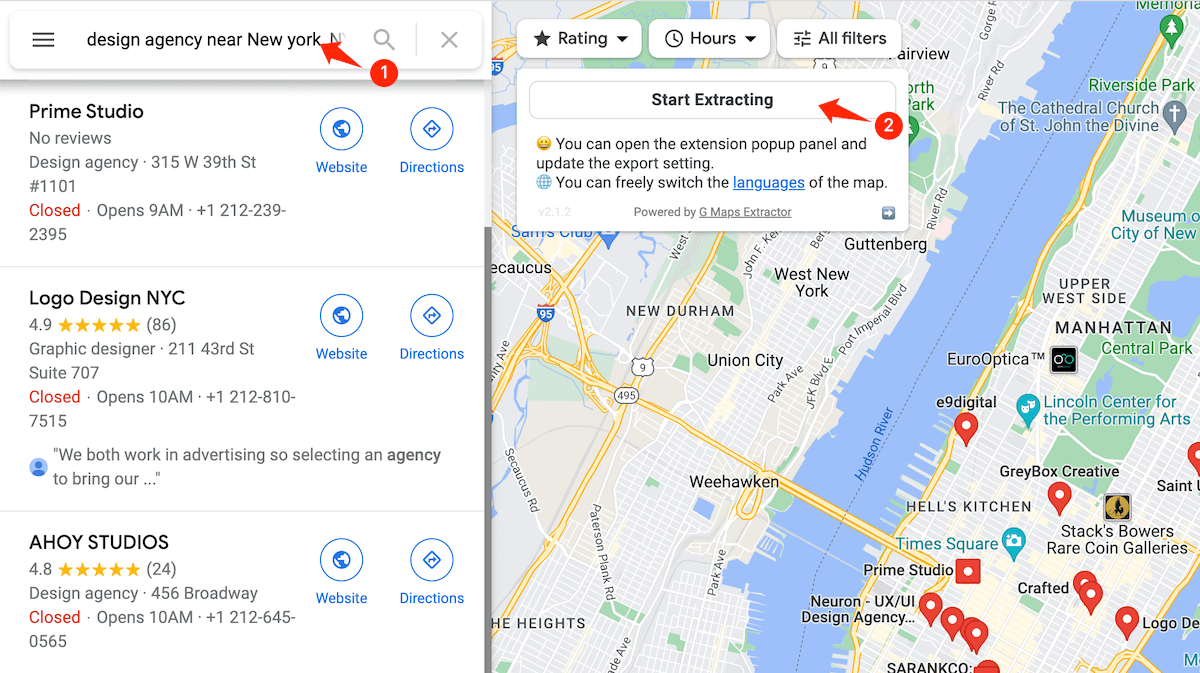
Prefer working inside Google Maps? The browser extension still handles how to extract emails from Google Maps for smaller jobs. You search as usual, and it pulls details from the listings on the page, including emails where they're available from public sources. Handy for a quick list off a search you're already running, though on large jobs the cloud based Online Scraper is faster. You can install the extension here.
Email Outreach Best Practices
A list is only worth as much as what you do with it. A few things separate outreach that works from outreach that gets ignored:
- Verify emails before you send. Public addresses go stale, and a bounced campaign hurts your sender reputation. Run the list through an email checker first.
- Personalize the message. Even one specific detail, their city, their niche, a recent review, tells the reader you're not blasting a list.
- Keep it relevant. Only reach out to businesses your offer actually fits. A tighter, smaller list beats a huge irrelevant one.
- Skip the generic mass email. The "Dear Business Owner" template is the fastest way into the spam folder.
That first point earns its own tool. Before a campaign goes out, run your addresses through the Email Checker to drop the dead ones. A small step that protects deliverability and keeps your bounce rate down.
FAQ
Does Google Maps show business emails?
Usually not, and that gap is exactly why how to extract emails from Google Maps is worth explaining properly rather than assuming the listing has one. Google Maps typically shows a phone number and a website, not an email. The emails you collect come from public business websites and online sources, found through the link on the listing, when a business has published one.
Will every business have an email?
No. Expect gaps. An email is added when it's publicly available and left blank when it isn't. Fill rates vary a lot by industry, so treat the emails you get as a strong core of the list rather than a complete set.
How do I export the leads?
The Google Maps Scraper lets you export Google Maps leads to CSV. Open the file in any spreadsheet, or import it straight into your CRM as a prospect list.
Should I verify the emails first?
Yes. Public addresses go out of date, so run your list through the Email Checker before any campaign. It removes invalid addresses and protects your sender reputation.
Can I automate this for a CRM?
Yes. The Google Maps Scraper API returns JSON and fits CRM enrichment, lead database building, and scheduled workflows. The same email caveat applies: addresses come through when they're public.
Conclusion
Google Maps is one of the best starting points for local lead lists, as long as you're clear on what it gives you. It reliably provides names, phones, websites, and categories. Emails come from public business websites when available, so build your list expecting a strong set of contacts, not a complete one. That's really the whole answer to how to extract emails from Google Maps: pull what's public, verify it, and treat gaps as normal rather than a failure.
Run the Online Scraper to build the list, verify the addresses before you reach out, and use the API if you're feeding a CRM. Then spend your energy on the part that wins deals: a relevant, personal message to the right businesses.
Start Google Maps Scraper Free | Verify Extracted Emails with Email Checker | View Google Maps Scraper API